
The Reflex.
When something new appears in Europe, a technology, a risk, a crisis, the first question is: who will regulate it? In America the question is: who will build it? This is no accident and no whim of the moment. It is a reflex with two hundred years of history behind it, worn in so deeply that hardly anyone notices it any more. Behind it stands an idea this series has so far only brushed from the outside: that the state is not a necessary evil to be chained, but the highest form of reason itself.
For twelve episodes the subject was the order from below. The law that grows out of custom. The property that comes into being before the state. The religion that organises itself. The settler who builds a cabin and calls the land his own. Now it is time for the other pole: command from above.
In Episode 10 we followed one strand of the Enlightenment as far as the guillotine. France appealed to Rousseau, to the single, undivided will of the people, and out of that will came Robespierre’s blade. But that strand did not end in Paris. Its more lasting work was done elsewhere. It crossed the Rhine, and in Berlin it was built not into a blood tribunal but into a system that governs Europe to this day.
And not only in Berlin. The strong state from above is the continental basic form, and it had two engines. France supplied the body. Louis XIV had created the centrally directed state, and Napoleon cast it into lasting shape: prefects in every corner of the land, a single book of law, the Code civil, which set the law from above instead of letting it grow from below like the common law (Episode 4), and elite schools the state raised for itself. Germany supplied the soul, the philosophy that turned the apparatus into an idea. Vienna ruled from above in the Josephinist manner, St Petersburg held its peasants in serfdom until 1861. This episode keeps mainly to the German line, because that is where the thought saw through itself. But the reflex is at home everywhere, from Paris to St Petersburg.
The One Will
At the beginning stands a Genevan we have already met twice. Jean-Jacques Rousseau, the man Hume brought to England and who repaid him with accusations of conspiracy. We leave the quarrel where it was, in Episode 9, and take only the idea he left the world.
Rousseau asked how a man could be free and still have to obey. His answer was the volonté générale, the general will. Not the sum of what individuals want, but what they would want if they only had the whole in view. Whoever submits to this will obeys not a foreign master but his own better self. And whoever refuses it? Him, Rousseau wrote, one “will force to be free.”
You have to read the sentence twice to feel its full force. It is the exact opposite of what Locke gave us in Episode 12. With Locke, property, and with it right, comes into being before the state and if need be against it; the individual brings his freedom with him, and the state has only to protect it. With Rousseau the individual dissolves into the whole and receives his freedom back, ennobled, as a part of the general will. Hume, who distrusted every system that claimed to know a man better than he knew himself, would have shuddered. But Hume was dead by 1776, and the field, on the Continent at least, now belonged to others.
Endure It or Throw It Off
Between Rousseau and Hegel stands a third, the greatest of them all, and he too was bent by the worshippers of the state. Immanuel Kant in Königsberg revered Rousseau, whose portrait was the only one hanging in his study, and he owed the sceptic from Episode 9 more than he owed anyone: David Hume, Kant wrote, had woken him from his “dogmatic slumber.”
Kant made duty the heart of his ethics. In the Kaiserreich, the German Empire, this was turned into corpse obedience, the Kadavergehorsam of “I was only doing my duty.” That too was a bending, for Kant meant the opposite. Duty for him meant autonomy, giving oneself a law one can answer for before one’s own reason. An order that violates human dignity is, for Kant, never a duty.
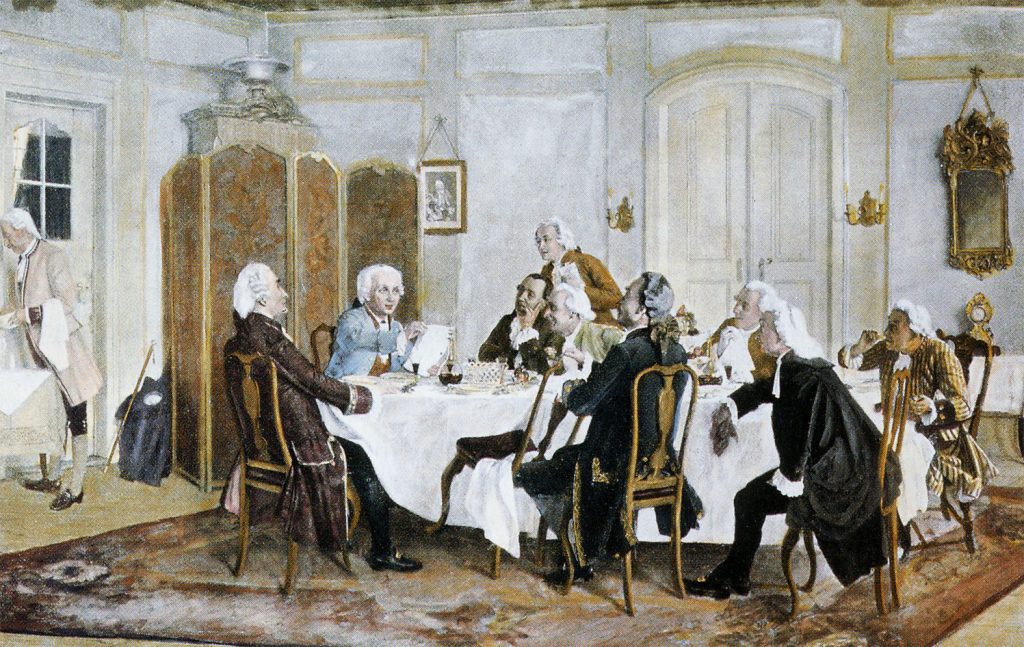
But with Kant it did not stop at a misunderstanding. Here he handed the worshippers of the state a real tool, and it divides him sharply from the Anglo-Americans. The freedom to think and to write he granted the citizen completely; a right to rebellion, however, he rejected categorically, even against a tyrant. His reasoning was not servility but logic. If everyone were allowed to break the law the moment he judged it unjust, there would be no final legal authority left, and everything would fall back into the state of nature, into the right of the stronger. A bad state, he held, must be endured, as long as it keeps any order at all.
Here the worlds divide, at their sharpest point. Locke saw the state as a trustee that could be dismissed: if it breaks the contract and turns tyrannical, it forfeits its legitimacy, and the citizens may throw it off. Out of this thought came the American Declaration of Independence. Hume, more sober, stripped the state of its halo from the other side: governments almost never arise from noble contracts, he said, but from conquest and usurpation, and the moment one does more harm than good, it forfeits its claim to obedience. The one founded the right of resistance, the other disenchanted the state. Kant forbade resistance. In that single contrast, endure it or throw it off, lies the whole distance between command from above and order from below.
The State as Reason Made Real
The French made the idea into a revolution. The Germans made it into a philosophy, and that lasted longer. Where Kant still thought of the state as a mere barrier against chaos, one to be endured, Georg Wilhelm Friedrich Hegel, professor in Berlin, went further and thought the idea through to the end. Where Locke and the Americans saw in the state a danger, something to be fenced in with constitutions and the separation of powers, Hegel saw in it the completion of freedom. The individual on his own is caprice and whim. Only in the state, in its laws, institutions and customs, does reason become real, does accidental willing become rational willing.
A famous sentence sums this up, and it is almost always misquoted. People say Hegel called the state “the march of God in the world,” as though it were a conquering god in jackboots. He did not write that. The sentence stands in an addition to his Philosophy of Right that does not even come from Hegel himself but from his students’ lecture notes, and it reads: “It is the way of God in the world, that the state exists.” His word is Gang, a going, a course, not a march. The state does not march. That it exists at all, that over the jumble of individual interests there stands an ordered reason, that is the divine thing. It is a quiet deification, and for that very reason a thorough one.
One does Hegel an injustice by seeing in this only the lackey of authority. The same idea also gave birth to the Rechtsstaat, the state bound not by the whim of a prince but by its own law, predictable, equal before all. The officials who administer it Hegel called the “universal class,” a stratum meant to serve not its own advantage but the whole. And when he said “state,” he rarely meant the government or the army, but Sittlichkeit, ethical life, the invisible bond of trust, law and shared values that holds a society together. Hegel, who as a young man had celebrated the French Revolution, wanted no parade ground.
What the Germans made of it was something else, and it rested on a second misunderstanding. Hegel’s most famous sentence, too, is misused to this day: “What is rational is actual; and what is actual is rational.” Conservatives read it as a formula for obedience: whatever the state does is, because it simply exists, already rational and therefore good. Hegel meant almost the opposite. “Actual,” for him, was not everything that merely happens to be there; a tyrannical state was present, but not “actual,” because it had lost its inner reason. Out of the guarantor of freedom the Kaiserreich made the duty of subjecthood, and a century later Karl Popper accused Hegel of having paved the way for totalitarianism. Here lies the dark side, and it is more delicate than it looks. A state that is supposed to be reason made real is hard to criticise; whoever stands against reason is seldom in the right. The idea invited abuse, even if its author did not want the abuse.
The Red Pen
An idea stays pale as long as it lives only in books. It becomes powerful when it shapes minds before they can even read. That is exactly what happened, in the same Berlin, in the same years.
Between 1809 and 1810 Wilhelm von Humboldt rebuilt the Prussian education system. His vision was at first a fine and free one: education as an end in itself, the unfolding of the whole human being, not for use but for its own sake. Humboldt was no statist; he even wrote a treatise on the limits of state action and distrusted the authority that wants to regulate everything. But what the Prussian civil-service tradition made of his ideal was something else. Out of free self-cultivation came the training of the loyal, disciplined, error-free servant of the state.
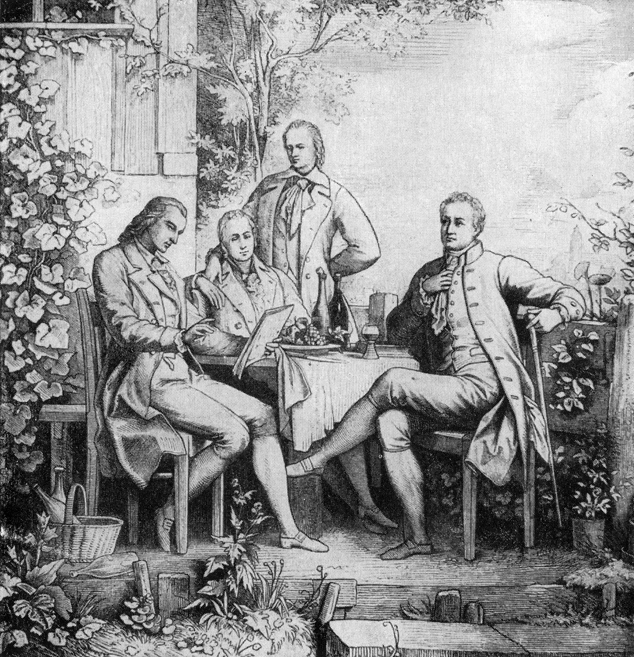
And even this machine the state had not thought up for itself. Its model stood in Halle. There, around 1700, the Pietist August Hermann Francke had built, out of faith, an orphanage, schools and workshops, grown from below, carried by piety and donors, as we saw in Episode 11. The Soldier King, Frederick William I, recognised how useful this was, made Halle Pietism almost a state church, took its teachers and army chaplains into his service, and had orphanages and garrison schools built on Francke’s model. Out of pious self-help came a state institution. That is the continental method in a single image: whatever arose from below, the state took and carried on from above, larger, more thorough, and under supervision.
The symbol of this system was the red correcting pen. Every mistake had to be marked, every inaccuracy rebuked; perfection was not merely desirable, it was declared a moral duty. Knowledge flowed from above to below, from the teacher, the untouchable source, to the pupil, the silent recipient. Whoever risked a mistake was exposed, and so preferred to keep quiet. It was a machine that produced thoroughness and fear in equal measure.
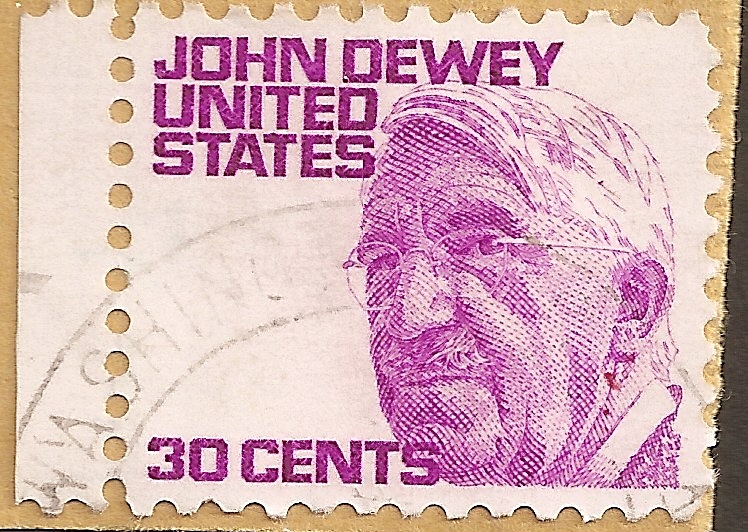
In the same century, across the Atlantic, the exact opposite picture took shape. John Dewey, the most influential educator in America, proclaimed the principle that to German ears sounded outrageous: learning by doing. Education was not abstract perfection but preparation for life. A mistake was no blemish but a chance to learn; taking part counted for more than the perfect answer. That suited the frontier this series has already described. In the wilderness no memorised system helped. A settler who brooded over the theoretically perfect solution while his cabin burned was a dead settler. Pragmatism beat perfectionism because survival depended on it. Dewey only gave the frontier spirit a philosophy.
But here the open ledger belongs, and for that one must hold apart two things that easily run together: the building and the spirit inside it. The building was the envy of the world. Prussia introduced compulsory schooling early, paid for the schools out of the state treasury, trained its teachers in seminaries of their own, and arranged the pupils by year groups. Out of this grew the highest literacy rate of the nineteenth century. In 1843 the American reformer Horace Mann travelled there expressly and came back full of enthusiasm. Tellingly, he praised not the drill but the opposite: the order, the trained teachers, and methods he thought gentler than the beating-pedagogy of the American school of the day. What he took home was the system, not the cane. The American public school is built in large part on the Prussian pattern. And Humboldt’s Berlin University of 1810, which united research and teaching, became the model of the modern university as such, copied as far as Baltimore, where in 1876 Johns Hopkins University was founded expressly on the German model.
The spirit inside the building was another matter. The very system the world envied for its reach carried command from above at its core: the teacher as untouchable authority, knowledge that flowed in one direction only, the fear of the mistake. It raised conscientious, reliable, thorough people, and it raised in them the shyness of the risk as well. The same hand that built the grandest educational edifice of the age also wrote the red pen into people’s heads.
The Visible Hand
What held for minds held for the economy. In Episode 7 stood Adam Smith with the invisible hand: let people pursue their own advantage, and the market orders the whole better than any planner could. From the Continent came the answer. The visible hand of the state was nothing new there; in France, Colbert had already wielded it under Louis XIV, with state manufactories and protective tariffs. What was new was that someone now gave it a whole theory: Friedrich List.
List held Smith to be a thinker of rich countries. A front-runner like England, which had long since built up its industry, could afford free trade; it had already won. A latecomer like Germany, fragmented and backward, would simply be run over in free competition. Its young industries first needed protection, an “educational tariff,” until they were strong enough to stand on their own. The state was not to look on but to build: tariffs, railways, a common market. List was one of the drivers of the German Zollverein of 1834 and a pioneer of the railway. Where Smith praised the invisible hand, List relied on the very visible hand of the state.
And now the irony no one expects. List did not learn this in Germany. He learned it in America. Persecuted at home, he emigrated to the United States in 1825 and landed, of all places, in Reading, Pennsylvania, in Berks County, in the middle of the German Pennsylvania of Conrad Weiser and the Muhlenbergs. There he edited the German-language Readinger Adler for a few years and absorbed the American protective-tariff debate, the “American System” of Henry Clay, the tradition of Alexander Hamilton, who wanted to raise the young republic behind tariffs. In 1827, in Pennsylvania, List wrote his Outlines of American Political Economy. The economic nationalism we take to be quintessentially German had an American passport. Protectionism was no German disease; the United States industrialised itself behind high tariffs. List only brought the American lesson home and gave it a system.
Revolution from Above
Out of all this, the idea, the school, the directed economy, one man forged the finished tool. Otto von Bismarck was no philosopher. He was a realist to the bone, the man of “blood and iron,” who united Germany not through speeches and majority votes but through three wars. If anyone stands for the cool state from above, it is he.
That is exactly why his greatest deed is so astonishing. Bismarck created the first social insurance in the world: health insurance in 1883, accident insurance in 1884, old-age and disability insurance in 1889. The welfare state, which we today take for an achievement of the labour movement, for something won from below, came in Germany from the very top, and it came from cool calculation. Bismarck had banned and persecuted the Social Democrats by law in 1878. The social insurance was the other half of the same pincer: take the socialists’ issue away, bind the worker to the state, make him a grateful subject instead of a revolutionary. “Revolution from above,” they called it. Benefaction as a technique of rule.
One may find that cynical. One also cannot overlook what came of it. It worked, and the world copied it. In 1908 the British Chancellor of the Exchequer, David Lloyd George, travelled to Germany to look at the model, and brought home the National Insurance Act of 1911. America followed in 1935 with Social Security. Perhaps the most humane institution of the modern state, insurance against sickness, accident and old age, sprang not from the order from below but from the coldest tradition from above.
What Remains
This is the other pole, painted in full. Not the caricature of the wicked authoritarian state, but a self-contained, often brilliant tradition. Out of command from above came the Rechtsstaat, which binds power to law; the research university, which the world copied; the social insurance that saves millions from ruin; an economy that turned latecomers into industrial powers. That is no small ledger.
And on the other side, the price. A state that wants to be reason made real easily turns the citizen into a subject and itself into the measure by which nothing more is measured. A school that punishes mistakes educates for thoroughness and for fear at once. A general will that may force the individual to be free knows, in the end, no limit that holds it back. Where this road could still lead in the twentieth century is another story, and a far darker one.
Which weighs more, the order, the security, the Rechtsstaat, or the citizen who becomes a subject, each reader may decide for himself. This series does not pass the verdict. It only lays the two poles side by side, the order from below and command from above, and shows that neither is to be had for free.
This order from above had its peace and its progress. It also had a direction. In that same nineteenth century the revolution from below failed in Germany, and unification came, as everything here did, from above, with blood and iron. Of that, and of where it led, the next episode will tell.
Sources and References
Primary Sources – Jean-Jacques Rousseau, Du contrat social (1762), Book I, ch. 7 — “on le forcera d’être libre” (“he will be forced to be free”) – Immanuel Kant: Grundlegung zur Metaphysik der Sitten (Groundwork of the Metaphysics of Morals, 1785) — duty as autonomy; Über den Gemeinspruch … (1793) and Die Metaphysik der Sitten (1797) — the categorical prohibition of active resistance or revolution against the head of state; Beantwortung der Frage: Was ist Aufklärung? (1784) — the “freedom of the pen”; Prolegomena (1783) — Hume had woken him from his “dogmatic slumber” – G. W. F. Hegel, Grundlinien der Philosophie des Rechts (Elements of the Philosophy of Right, 1820): §258 Addition — “It is the way of God in the world, that the state exists” (the Addition comes from students’ lecture notes, not from Hegel’s own hand; the common English rendering “the march of God in the world” is wrong); Preface — the “double dictum”: “What is rational is actual; and what is actual is rational” (“actual,” Wirklichkeit, as realised reason, not mere existence); on the “universal class” of officials §§287–297; on Sittlichkeit (ethical life) §§142 ff. – Friedrich List, Outlines of American Political Economy (Philadelphia 1827); Das nationale System der politischen Ökonomie (The National System of Political Economy, 1841) – John Dewey, Democracy and Education (1916) – Horace Mann, Seventh Annual Report of the Board of Education (1843)
Secondary Literature and References – On continental statism beyond Germany: France as the oldest engine (Louis XIV / Colbert with state manufactories and mercantilism; Napoleon’s prefect system, the Code civil of 1804 as law set from above against the common law, the Grandes Écoles / Université impériale); the Habsburg lands (Josephinism, “enlightened absolutism” from above); Russia (serfdom until 1861) – On the statification of religious institutions: August Hermann Francke’s Pietist foundations in Halle (orphanage, schools, workshops, from 1695/98) as a model grown from below; Frederick William I and the Prussian-Pietist alliance (Halle teachers and army chaplains in state service, orphanages and garrison schools on Francke’s model) — a payoff to Episodes 8 and 11 – On Rousseau versus Locke: the general will vs. property-before-the-state (cf. Episode 12); on the radical vs. the moderate Enlightenment (cf. Episode 10) – On the bending of Kant by worshippers of the state (duty → “Kadavergehorsam,” corpse obedience, the term itself of Jesuit and military origin) against Kant’s actual teaching (duty = autonomy, no obedience against human dignity); Kant’s prohibition of resistance against Locke’s “right of revolution” (Declaration of Independence 1776, cf. Episode 12) and Hume’s pragmatic disenchantment of the state (cf. Episode 9) – On Hegel’s concept of the state and its ambiguity (Rechtsstaat and Sittlichkeit on one side, the deification of the state on the other); the frequent mistranslation of the §258 Addition and the misreading of the double dictum as a “formula of obedience” by conservative and national-liberal readers in the Kaiserreich; Karl Popper, The Open Society and Its Enemies (1945) — Hegel as alleged precursor of totalitarianism, corrected by more recent scholarship as Hegel’s philosophy of freedom; Hegel’s youthful sympathy for the French Revolution – On Wilhelm von Humboldt: the reform of Prussian education 1809/10; the founding of the University of Berlin 1810 (unity of research and teaching) as the model of the modern university (incl. Johns Hopkins 1876); Humboldt’s own treatise Ideen zu einem Versuch, die Grenzen der Wirksamkeit des Staats zu bestimmen (The Limits of State Action, 1792) – On the Prussian educational tradition (discipline, error-culture, deference to authority) and the American counter-model (Dewey, learning by doing, frontier pragmatism) — after A. P. John, Die unmögliche Liebe (chapter “Humboldt versus Dewey”) – On Horace Mann’s Prussia journey of 1843 (Seventh Annual Report): what he praised was the organisation (compulsory schooling, teacher seminaries, year groups) and the comparatively mild, Pestalozzian methods, not the authoritarian drill; the adoption of the structure into the American school system, “the system, not the cane” – On Friedrich List in the United States (1825–1832): editor of the Readinger Adler in Reading, Berks County, Pennsylvania; the influence of Hamilton’s protective-tariff tradition and Henry Clay’s “American System”; the educational tariff, the German Zollverein of 1834, railway pioneer – On Bismarck’s social legislation: health insurance 1883, accident insurance 1884, old-age and disability insurance 1889; the Anti-Socialist Law of 1878; “revolution from above” as a technique of rule – On the international impact: David Lloyd George’s journey to Germany in 1908 and the British National Insurance Act of 1911; American Social Security 1935 – Looking ahead: the expulsion of the Göttingen scientific elite in 1933, emigration to Princeton / the IAS — material for a later episode
Schreibe einen Kommentar